


Support and operations leaders have spent years investing in better platforms and smarter AI.

For some businesses, the results look positive.

AI handles the simple stuff, like resetting passwords and locating packages. Resolution times improved. The few customers who bother taking a CSAT survey remain satisfied.

But those metrics don't show the whole picture.

Behind them, something harder to measure keeps accumulating: the time B2B teams spend finding the right people, managing handoffs, and keeping context alive across teams. None of it shows up on any dashboard.

In the more complex world of B2B companies and the customers they serve, the job keeps getting harder. Customers keep repeating themselves. Handoffs keep breaking down. Good people keep leaving.

The result: billions spent on platforms that got faster at closing tickets while the underlying operations became increasingly inefficient.

The Invisible Line Item
in B2B Customer Operations

The Coordination Tax

The typical B2B company spends nearly 3 hours coordinating for every 1 hour spent solving customer problems. That's the finding from our survey of 665 B2B customer service, operations, and account management leaders, and it holds across industries, company sizes, and platform investments.

When a customer escalates a contract dispute, the fix usually takes an hour. Finding who owns it, getting them the context, and closing the loop between sales, finance, and operations? Three hours. 

It's not a bad day. It's not a hard account. It’s the Coordination Tax.

Only 5% see the complete picture — handoffs, coordination time, and duplicate work. ”

Software upgrades made it worse

More sophisticated platforms didn't reduce the coordination burden. They made it worse.

Most customer service and operations systems were built for a single customer asking a single question of a single agent. 

Anything that doesn't follow that pattern gets bounced around for weeks.

Companies with sophisticated operations platforms resolve 73% of requests in under an hour, compared to 56% with basic tools. But the share of time teams spent actually solving problems stayed flat, regardless of how advanced their system was.

They got faster at running an inefficient process, and the faster they ran it, the more coordination overhead they generated. The gap wasn't in the software's performance. It was in what the software was built to see.

Implementing more advanced software didn't solve the coordination problem.
It scaled it.

New automation. Same tax bracket.

AI delivered on the easy stuff. But when a customer issue crosses teams, it routes by rules, not reality. When coordination happens in a side email chain, AI loses the thread entirely. 

The result: more than 70% of B2B companies hit significant AI problems in the past three months. For one in four, they happened every day.

The coordination tax didn't go down. It just got a new set of tools.

“AI has given false information or told the customers there is no need to continue contacting customer support to resolve an issue.”

The coordination tax costs B2B companies their best people

Coordination burnout doesn't stay invisible forever. It shows up in exit interviews.

Over a third of companies lost a top performer to coordination burnout in the past year. Not because they couldn't handle the customers. Because the job kept getting harder in ways nobody was measuring.

When those people leave, the damage doesn't stay internal. Customers feel it too. Companies turn to AI to fill the gap, but the AI runs on the same platforms that couldn't see the problem in the first place.

The top 14% found the tax break

Some B2B companies already figured this out. They're not doing simpler work or serving easier customers. But they spend more time solving than coordinating, their AI creates fewer failures, and they're keeping more of their people.

One in seven companies in this study live here. What separates them is what they built for: coordination infrastructure, not just task automation.

Before your next platform conversation, answer one question: where does your team's time actually go? Not what your dashboard shows, but what actually happens between the moment a request arrives and the moment it's resolved. If your team looks like most of the companies in this study, you're not behind. You're normal.

But now you have the data and the language to make the case that normal isn't good enough.

SECTION 2:

SECTION 2:

The Coordination Tax: what “normal” actually looks like

The Coordination Tax: what “normal” actually looks like

Nobody gets into B2B customer service and operations expecting simple work. Success requires multiple teams, systems, and stakeholders at every step. That's expected.

Nobody gets into B2B customer service and operations expecting simple work. Success requires multiple teams, systems, and stakeholders at every step. That's expected.

But the coordination required to make it all possible has quietly become the biggest part of the job.

Customer requests stall because finding the right person, sharing the right context, and closing the loop between teams takes longer than solving the customer’s actual problem. You feel it every time a request moves between teams, and that feeling has a number now.

The typical company spends nearly 3 hours coordinating for every hour it spends solving customer problems. Not the worst performers. The middle.

What makes up the Coordination Tax

We asked respondents to estimate how their team's time is distributed during a standard customer request

Coordination time covers  finding the right people  coordinating next steps  internal meetings and messages looping in others, waiting on handoffs and re-explaining context.

Problem solving time includes  tracking down data and account history from systems  and implementing solutions.

A billing dispute touches finance. A contract question loops in sales. A product issue escalates to engineering. Most platforms can route a ticket from one team to the next. 

But many can’t move the context with it. The next person starts over, asking questions the customer already answered. By the time the problem gets solved, most of the time spent on it was not spent solving.
Expand on this section

“Normal” is costing more than you think

That 3-hour number sits in the middle of a much wider spread.

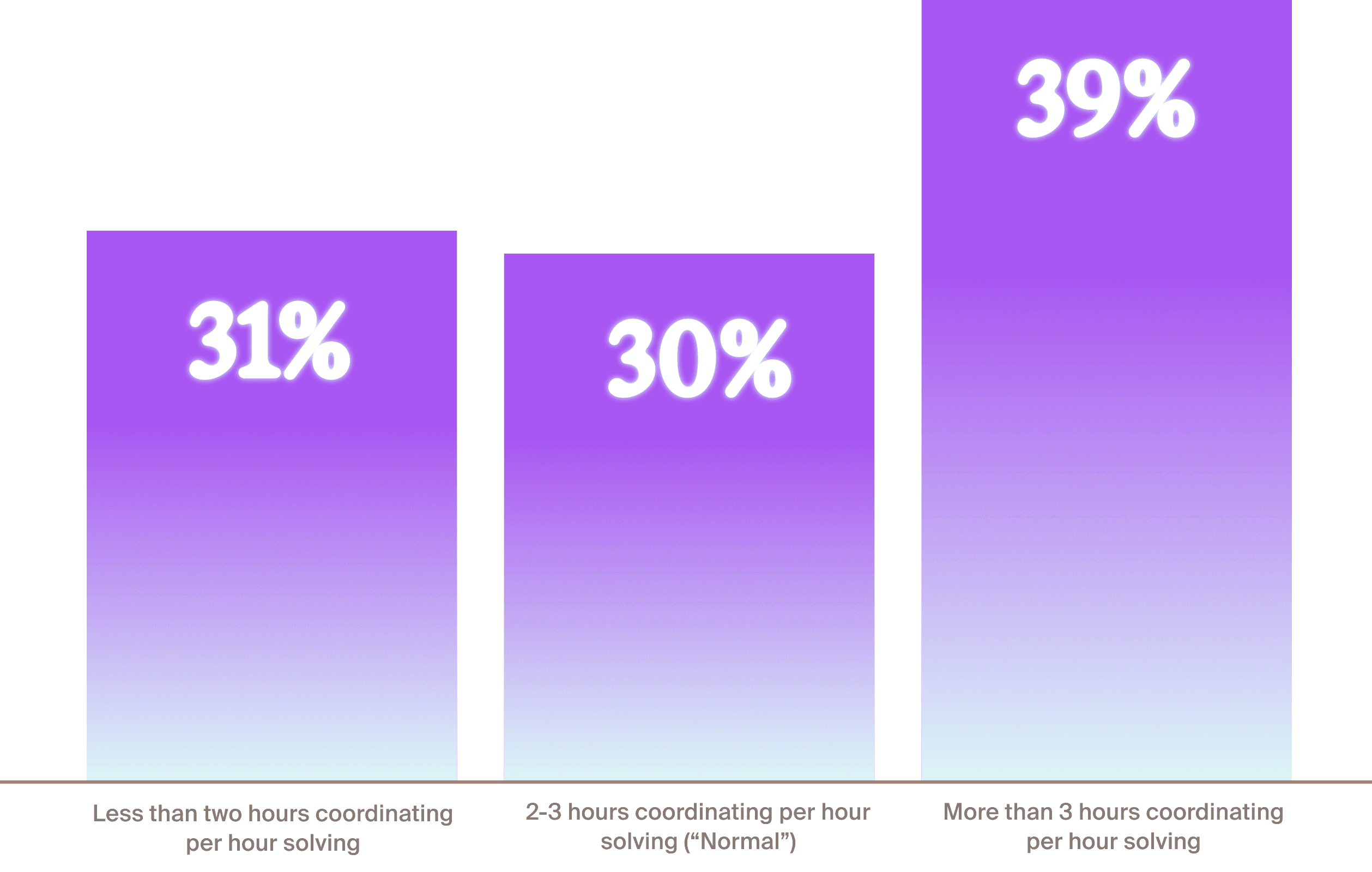
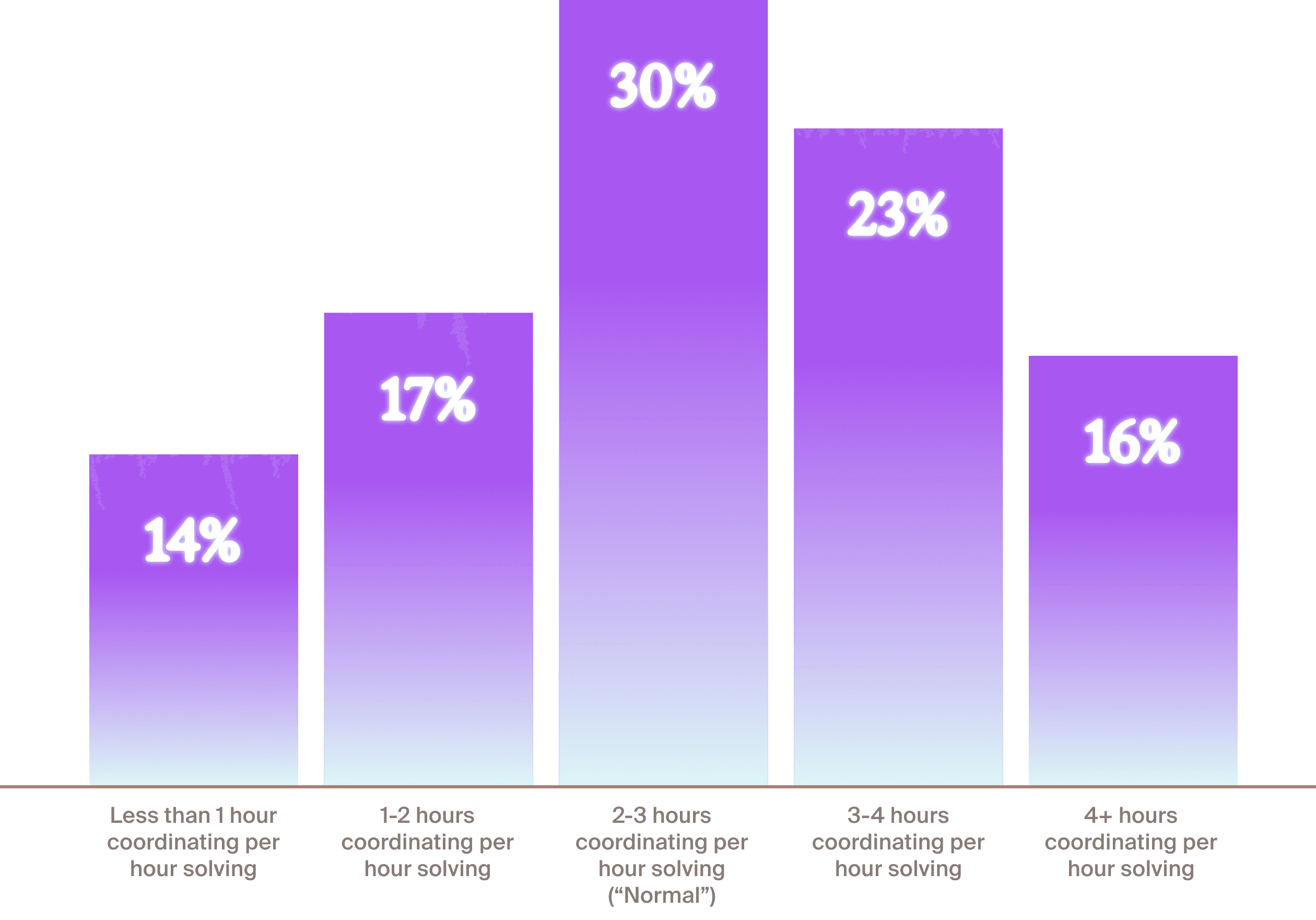
Roughly 30% of companies fall into what we're calling the “normal” range: somewhere between 2 and 3 hours of coordination for every hour of problem-solving. 

For most companies, it's worse than that. Thirty-nine percent spend more than 3 hours coordinating for every hour solving. It's the largest segment in the study.

Legacy customer service and operations platforms track whether problems got resolved and whether customers are happy. They don't track the operational cost required to get there: the hours spent finding the right people, managing handoffs, and keeping context alive across teams. 

Those costs don't show up on any dashboard. So for most companies, the pain is familiar, but the source of it is not.

This study puts a number on it. Nearly 70% of B2B companies spend at least 2 hours coordinating for every hour solving. 

“Normal” is deeply inefficient. 

And most of the software built to fix it was never designed to see it.

Expand on this section

“Normal” is costing more than you think

That 3-hour number sits in the middle of a much wider spread.

Roughly 30% of companies fall into what we're calling the “normal” range: somewhere between 2 and 3 hours of coordination for every hour of problem-solving. 

For most companies, it's worse than that. Thirty-nine percent spend more than 3 hours coordinating for every hour solving. It's the largest segment in the study.

Legacy customer service and operations platforms track whether problems got resolved and whether customers are happy. They don't track the operational cost required to get there: the hours spent finding the right people, managing handoffs, and keeping context alive across teams. 

Those costs don't show up on any dashboard. So for most companies, the pain is familiar, but the source of it is not.

This study puts a number on it. Nearly 70% of B2B companies spend at least 2 hours coordinating for every hour solving. 

“Normal” is deeply inefficient. 

And most of the software built to fix it was never designed to see it.

QUESTIONS TO ASK YOUR TEAM

Think of the last complex customer issue your team handled.

  • How much time was spent finding the right people and getting them the context they needed? How much was spent actually solving the problem?

  • If you don't know the exact answer, if you'd have to guess, you're already paying the coordination tax. The 3-hour number isn't an outlier. For most companies in this study, it's just a normal week.

SECTION 3:

SECTION 3:

Why software upgrades didn’t help

Why software upgrades didn’t help

Omnichannel tools. Workflow automation.
AI-powered routing.

Omnichannel tools. Workflow automation.
AI-powered routing.

These investments delivered what they promised: companies with sophisticated operations systems resolve 73% of requests in under 1 hour compared to 56% with basic tools.

So why does it still feel so hard?

Coordination stayed invisible

Most platforms were built to move tickets. Measuring what it took to resolve them wasn't part of the design. 

Resolution time and customer satisfaction track outcomes. Whether the problem got solved. Whether customers are happy. But they don't measure the full operational reality: where effort actually goes.

The work got more complex. The tools got more sophisticated. The metrics didn't change.
Expand on this section

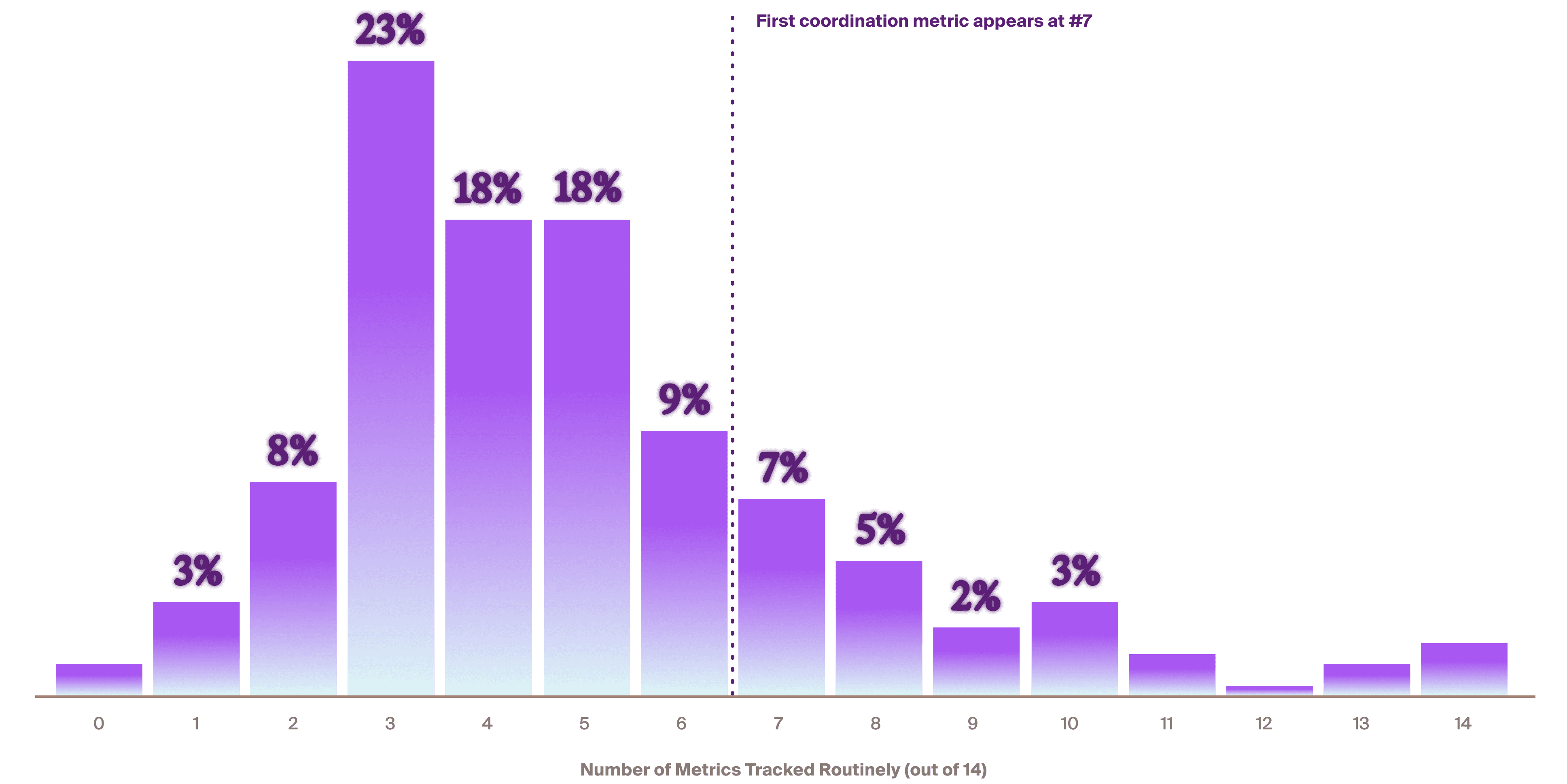
How many metrics do companies track routinely?

Most companies stop tracking before coordination ever enters the picture.

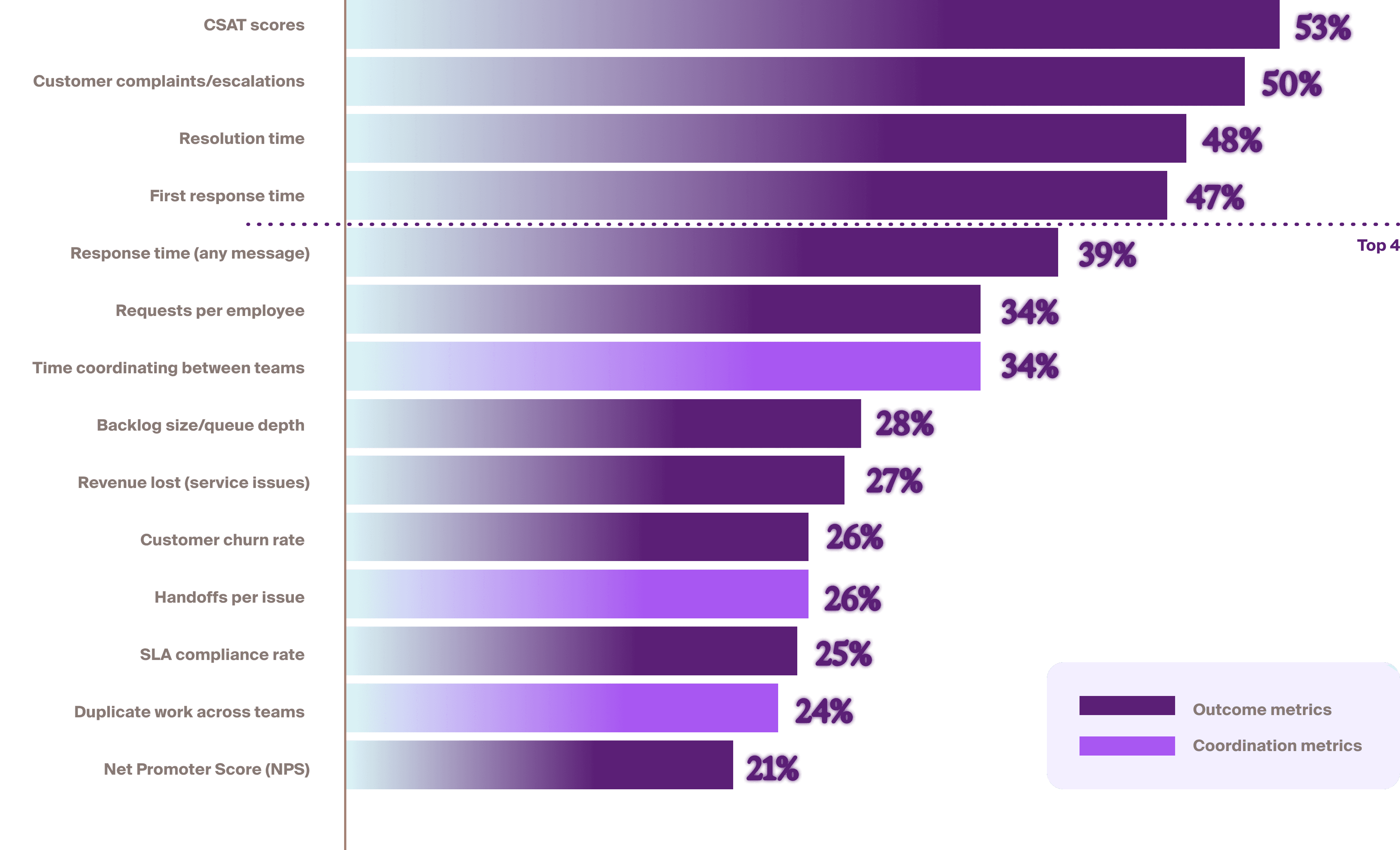
The typical company only tracks 4 metrics, and the most common were:

  1. CSAT (53%)

  2. Customer complaints or escalations (50%)

  3. Resolution time (48%)

  4. First response time (47%)

Which metrics do companies track routinely?

The pattern: all outcome metrics.

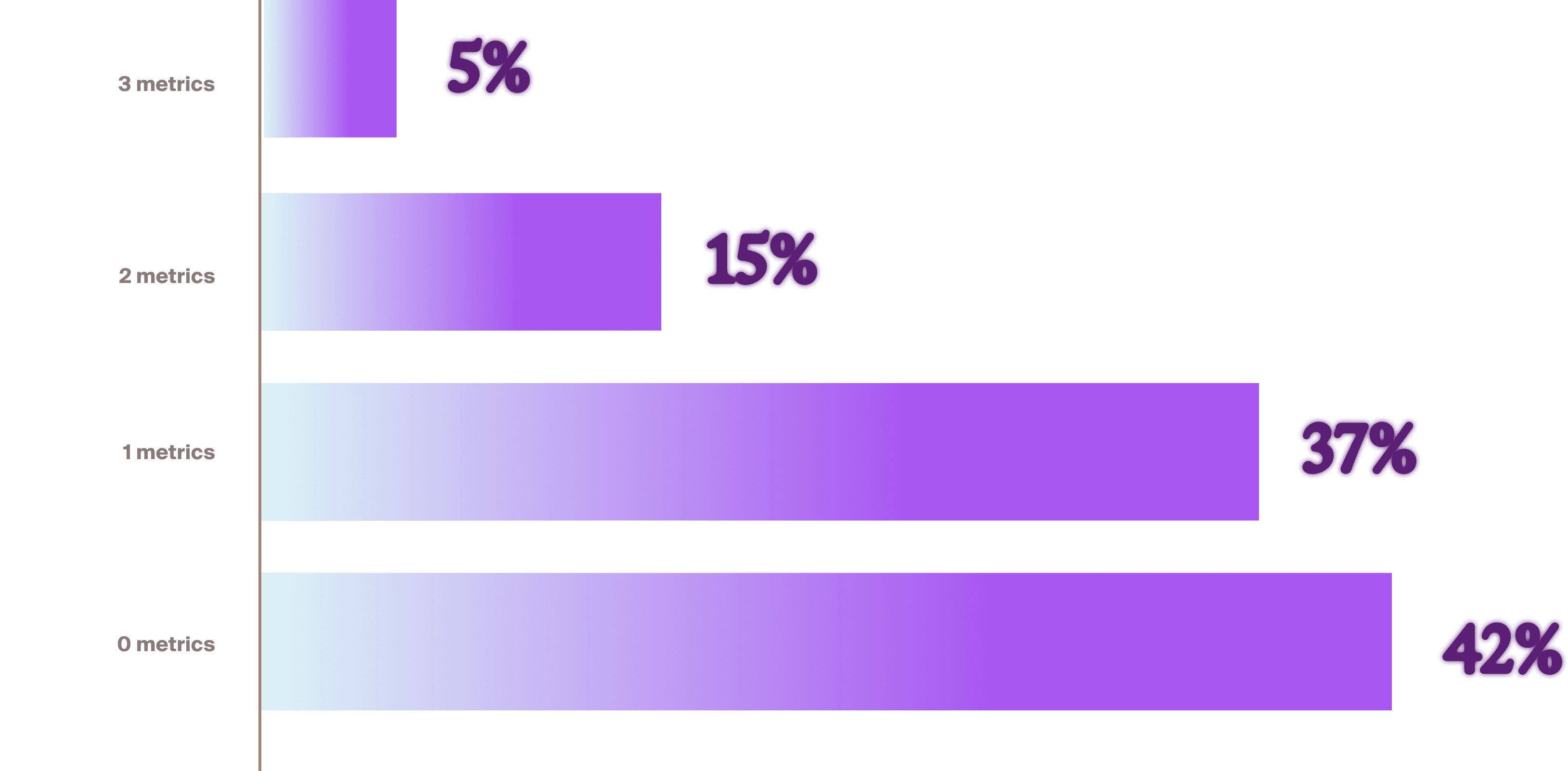
Forty-two percent of companies don't track coordination at all.

No visibility into handoffs per issue, time spent coordinating between teams, or duplicate work.

The coordination tax is unavoidable. For most companies, it's also invisible, because the coordination itself happens outside the systems meant to manage it. Among companies that track any coordination metrics (58%), most track just one of the three, and only 5% see the complete picture. 

How many coordination metrics do companies track routinely?

Upgrading the platform upgraded

the workarounds

Most customer operations software is designed around task automation. Route the request, send the response, log the interaction. These platforms assume each customer touchpoint was independent. 

But B2B customer work is inherently multi-team and cross-functional. Companies with complex operations adopt sophisticated tools because serving B2B customers with depth and expertise requires more stakeholders, more context, and more handoffs. The coordination tax isn't caused by platforms. It's inherent to the work.

Inherent doesn’t mean unmanageable. But managing it requires something most platforms weren't designed to do.

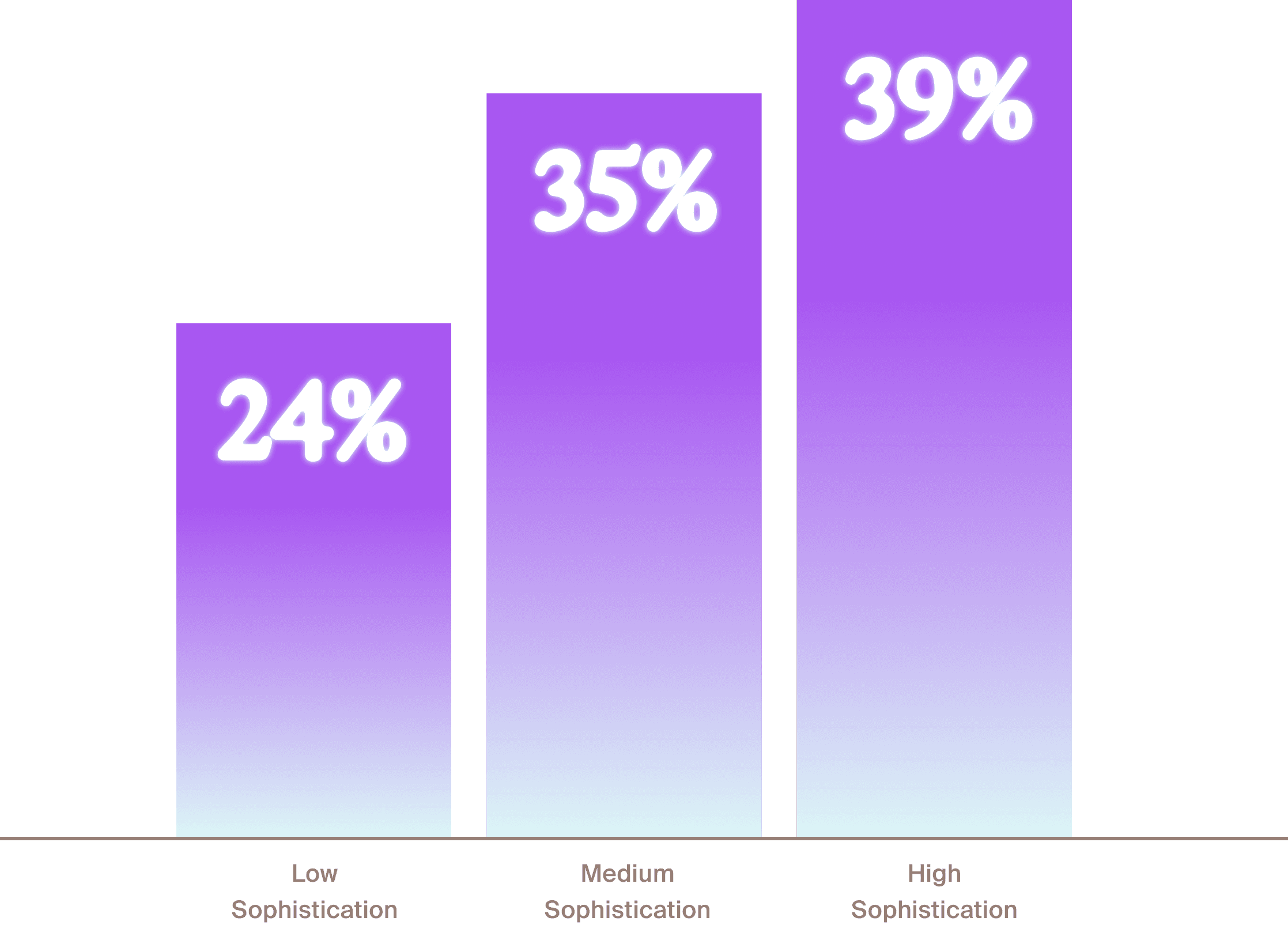
B2B companies running omnichannel, heavily automated platforms, the tools best fit for the complexity of their work, still reported higher coordination overhead than those with basic tools. Problem-solving time stayed flat at 21-24% regardless of platform sophistication. Coordination time remained invisible to platforms designed to measure tasks but not coordinate them.

Tool-switching between systems to gather context

The more capable the platform, the more complex the work it was handling, and the more coordination happened around it rather than inside it.

As software got more advanced, tool-switching between systems to gather context rose from 24% to 39%. The platforms still couldn't coordinate work across teams. So teams did it manually, through email, Slack, and meetings.

Expand on this section

How many metrics do companies track routinely?

Most companies stop tracking before coordination ever enters the picture.

The typical company only tracks 4 metrics, and the most common were:

  1. CSAT (53%)

  2. Customer complaints or escalations (50%)

  3. Resolution time (48%)

  4. First response time (47%)

Which metrics do companies track routinely?

The pattern: all outcome metrics.

Forty-two percent of companies don't track coordination at all.

No visibility into handoffs per issue, time spent coordinating between teams, or duplicate work.

The coordination tax is unavoidable. For most companies, it's also invisible, because the coordination itself happens outside the systems meant to manage it. Among companies that track any coordination metrics (58%), most track just one of the three, and only 5% see the complete picture. 

How many coordination metrics do companies track routinely?

Upgrading the platform upgraded

the workarounds

Most customer operations software is designed around task automation. Route the request, send the response, log the interaction. These platforms assume each customer touchpoint was independent. 

But B2B customer work is inherently multi-team and cross-functional. Companies with complex operations adopt sophisticated tools because serving B2B customers with depth and expertise requires more stakeholders, more context, and more handoffs. The coordination tax isn't caused by platforms. It's inherent to the work.

Inherent doesn’t mean unmanageable. But managing it requires something most platforms weren't designed to do.

B2B companies running omnichannel, heavily automated platforms, the tools best fit for the complexity of their work, still reported higher coordination overhead than those with basic tools. Problem-solving time stayed flat at 21-24% regardless of platform sophistication. Coordination time remained invisible to platforms designed to measure tasks but not coordinate them.

Tool-switching between systems to gather context

The more capable the platform, the more complex the work it was handling, and the more coordination happened around it rather than inside it.

As software got more advanced, tool-switching between systems to gather context rose from 24% to 39%. The platforms still couldn't coordinate work across teams. So teams did it manually, through email, Slack, and meetings.

Mid-market: where businesses jump into a higher tax bracket

Something shifts at mid-market scale. Not gradually. All at once.
00

External
touchpoints

00

Internal
touchpoints

00

External
touchpoints

00

Internal
touchpoints

EXTERNAL

Customer emails support with the dispute and attaches documentation

EXTERNAL

Support agent responds asking for clarification on the scope of the renegotiation

INTERNAL

Support agent identifies the right owner and loops in the account manager

EXTERNAL

Account manager reaches out directly to the customer to acknowledge the escalation

INTERNAL

Account manager contacts finance to verify the invoice and flag the discrepancy

INTERNAL

Account manager briefs legal on the renegotiation request

EXTERNAL

Customer follows up asking

for a status update

INTERNAL

Finance, legal, and account manager align on what can be offered

INTERNAL

Account manager briefs support agent on the agreed resolution before responding

EXTERNAL

Account manager presents the proposed resolution to the customer

EXTERNAL

Support agent confirms the final resolution and closes the loop with the customer

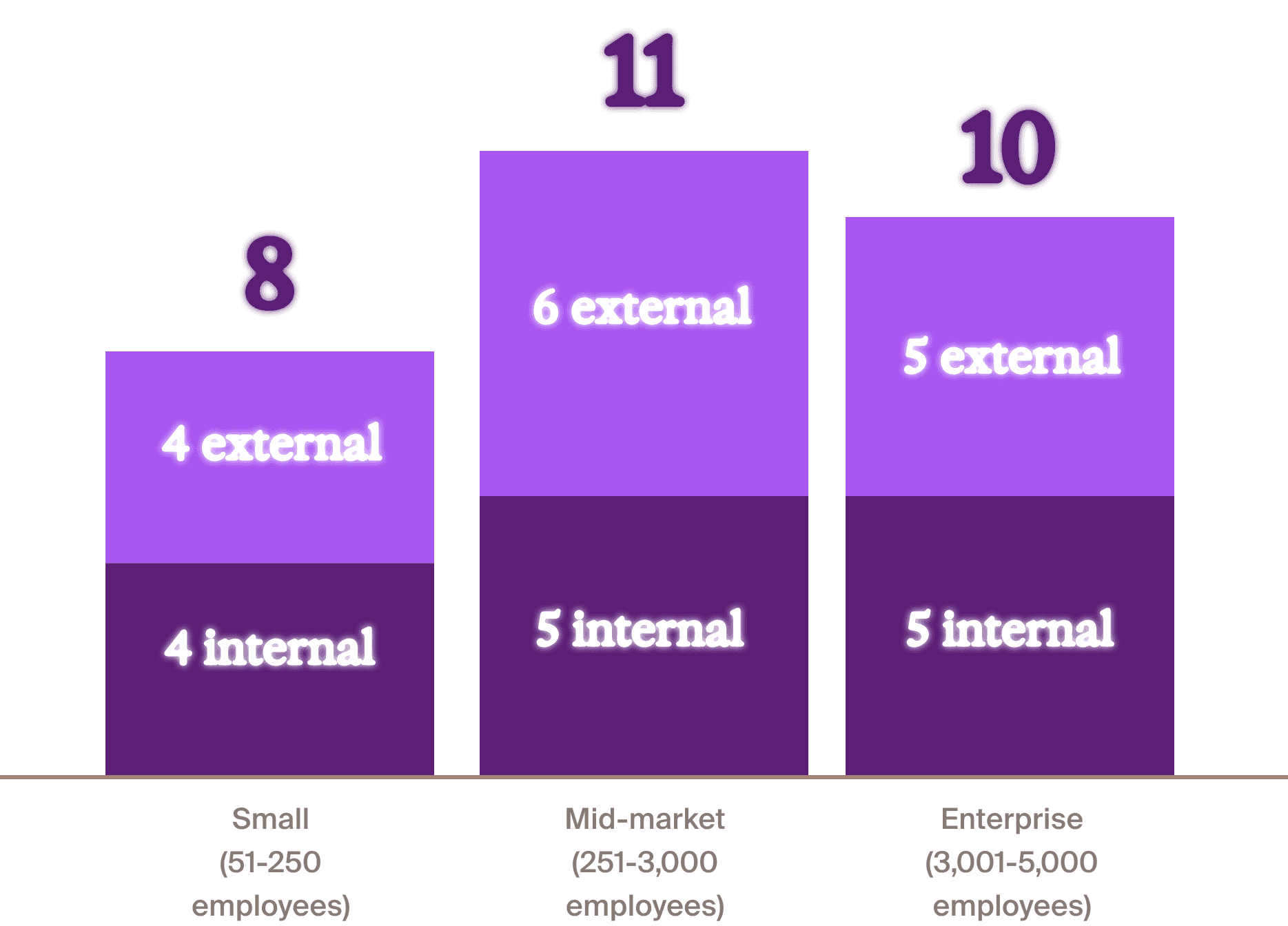
At smaller companies, a customer request averages 8 touchpoints. Four with the customer, four between the colleagues working to resolve it.

At mid-market, that number jumps to 11. More teams involved, more context that needs to travel with the request, more handoffs where something can get lost. This is the scale where coordination overhead outpaces the workarounds that used to be enough.

Enterprise companies stabilize around 10, absorbing some of that overhead through dedicated coordination roles and infrastructure mid-market teams are still building.

The platforms most mid-market companies are running were built for single-team workflows. An 11-touchpoint request was never part of the design.

QUESTIONS TO ASK YOUR TEAM

  • Think back to the last time you evaluated a new platform or decided to upgrade the one you had. What did you look at? Channel coverage, probably. Resolution time benchmarks. How well it handled ticket volume. Whether it integrated with your existing stack.

  • Coordination visibility likely wasn't on the list. Not because you missed it, but because the industry built its benchmarks around outcomes and left coordination off the list. The overhead was always there. It just never had a number attached to it.

  • When did you last look at how your team’s time is distributed across a complex request?

SECTION 4:

SECTION 4:

The AI efficiency trap

The AI efficiency trap

It’s no surprise that almost every company in this study (93%) uses AI in customer operations.

It’s no surprise that almost every company in this study (93%) uses AI in customer operations.

By conventional metrics, it delivered. First response times improved. Routine questions were deflected. Password resets and package tracking: AI handles these faster and cheaper than any human team. Every metric the industry had agreed to measure showed improvement.

For simpler operations, that's largely the whole story. But in B2B, the simple requests were never the expensive ones.

A billing dispute, a contract escalation, a logistics exception: these were the hard ones. Before AI, someone manually triaged every request, forwarded context to account management, and followed up to confirm handoff. Low velocity, high control. Everyone knew where the work was, but the queue was always full.

After AI, the same request is categorized and routed in seconds. Except the AI read “contract renewal” and sent it to the wrong team. Before Renewals could respond, the AI had already told the customer their issue was resolved. Spoiler: it wasn't. Two departments coordinated over Slack to untangle it. Neither the misroute, the false confirmation, nor the 20 minutes of back-and-forth appeared anywhere in the system. The queue metrics looked fine.

For B2B customer support and operations, AI didn't lower the coordination tax. It inherited it, then scaled it.

Whether they used basic workflow rules, AI-assisted routing, or fully automated systems, the typical B2B company still spent between 2.5 and 3 hours coordinating for every hour solving customer problems. AI freed up capacity on the simple stuff, but it had nothing to offer on the coordination overhead that was always the bigger cost.

Near three in four companies (71%) faced at least one significant AI issue in the past three months.

Near three in four companies (71%) faced at least one significant AI issue in the past three months.

For one in four companies, these weren’t occasional failures.
They were daily occurrences.

For one in four companies, these weren’t occasional failures.
They were daily occurrences.

Nearly half of companies that experienced daily AI issues were dealing with more than one simultaneously.

Nearly half of companies that experienced daily AI issues were dealing with more than one simultaneously.

The failures are coordination failures

The failures are coordination failures

AI created additional coordination work

AI created additional coordination work

AI lost context during handoffs

AI lost context during handoffs

AI failed to route requests correctly

AI failed to route requests correctly

Expand on this section

AI’s unsolved coordination gap

Nearly three in four companies (71%) faced at least one significant AI issue in the past three months. Across all AI-using companies, the top problems aren’t task automation failures. AI can effectively handle issue categorization and resolve routine questions without human involvement.

The failures are coordination failures:

  • AI created additional coordination work: 24%

  • AI lost context during handoffs: 22%

  • AI failed to route requests correctly: 20%

These problems emerge when AI operates on platforms designed for task automation. The AI can see the ticket. It can't see the three-team workflow happening in email threads and Slack channels to resolve it. 

This isn’t an AI problem. It’s a coordination problem, and AI can’t solve what it can’t reach.

The daily reality

For one in four companies, these aren’t occasional failures. They’re daily occurrences.

And when AI problems hit, they rarely arrive alone. Nearly half of companies experiencing daily AI issues deal with more than one simultaneously: a miscategorized request gets the wrong response, which sends the customer down the wrong path, which delays escalation, ultimately turning a two-hour problem into a four-hour one.

This isn't because AI is bad technology. It's because AI effectiveness depends on the platform it runs on.

When AI operates on platforms where coordination happens outside system boundaries, it can’t access the context it needs to make intelligent decisions. It routes based on rules, not reality. It loses context at handoff points because the context lives in forwarded email chains. It can't identify stakeholders because it can't see the coordination work.

What AI actually needs to work

We asked operations leaders which AI capabilities they need to manage complex, multi-team workflows. The most commonly requested were:

  • Understanding context across multiple teams and systems: 48%

  • Intelligent routing based on complexity and expertise: 47%

  • Learning from past successful resolutions: 47%

The top capabilities are coordination capabilities, and they’re exactly what AI can deliver when it’s built into a platform designed to coordinate the work, not just automate individual tasks.

QUESTIONS TO ASK YOUR TEAM

  • For the complex issues that cross teams in your operation, is AI making coordination lighter? Or is it working around the same gaps your team already does?

  • The most common AI failures in this study aren’t the ones that make headlines. They're quieter: a misrouted request, a handoff where context didn't travel, a customer told their issue was resolved when it wasn’t.

  • That gap exists on any platform where coordination happens outside the system. The AI reads what's in the ticket. The Slack thread and the forwarded email that explain what’s actually going on are somewhere else.

SECTION 5:

SECTION 5:

The cost of the coordination tax on teams

The cost of the coordination tax on teams

The hardest part of the coordination tax isn’t operational. It's human.

The hardest part of the coordination tax isn’t operational. It's human.

Over a third of companies in this study lost a top performer to coordination burnout in the past year. Not because those people couldn't handle difficult customers. Because they couldn't handle what surrounded the work: the forwarded email chains, the status check meetings, the hours spent finding people and re-explaining context that should have already been shared.

The remaining team picks up the tab

When a top performer leaves, the coordination work doesn’t leave with them. The same requests still need to move between the same teams. The same context still needs to travel with them. There’s just less capacity to carry it.

This is where the coordination tax becomes a retention crisis.

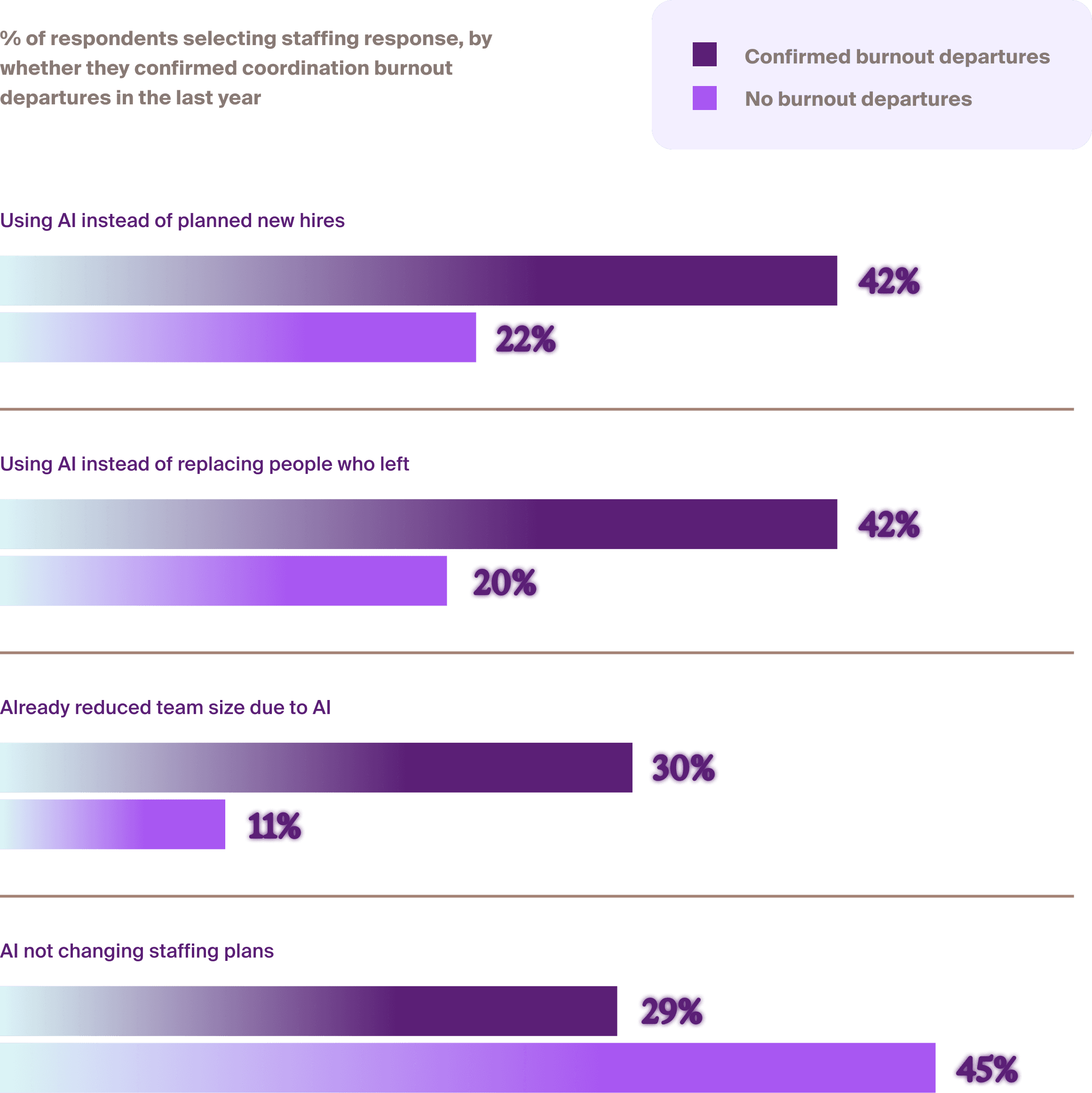
Among teams already spending more time coordinating than solving, 47% confirmed losing a top performer to burnout in the past year.

Coordinating across teams is part of the job. Spending 3 hours coordinating for every 1 hour of problem solving shouldn’t be.

Among teams where the balance was closer to equal, that number drops to one in four.

The difference isn’t the difficulty of the customers or the complexity of the industry. It’s how much of the job is spent coordinating versus solving. When that gap widens far enough, the job stops feeling like the job people signed up for.
Expand on this section

When top performers leave, AI fills the gap

When a top performer leaves, the instinct is to backfill. Increasingly, that means AI. 

Companies that lost someone to coordination burnout are significantly more likely to be deploying AI as a direct staffing replacement than those that haven't. 

But a person doesn't just handle tasks. A person knows who to loop in, when to escalate, and how to move context across teams. That coordination work happens quietly, and it doesn't show up on any dashboard until it stops happening. AI handles the task in front of it. The coordination the person was doing lands on whoever is left.

The AI being deployed to fill those seats operates on the same platforms, built with the same limitations, that couldn't prevent the burnout in the first place. It handles more volume. It doesn't reduce the coordination overhead that drove the departure.

Where the tax shows up for customers

The people who leave take more than their workload with them. They take the knowledge of who to call, how to escalate, and what a particular customer needs to hear. That's not in any system. When it walks out the door, customers feel it.

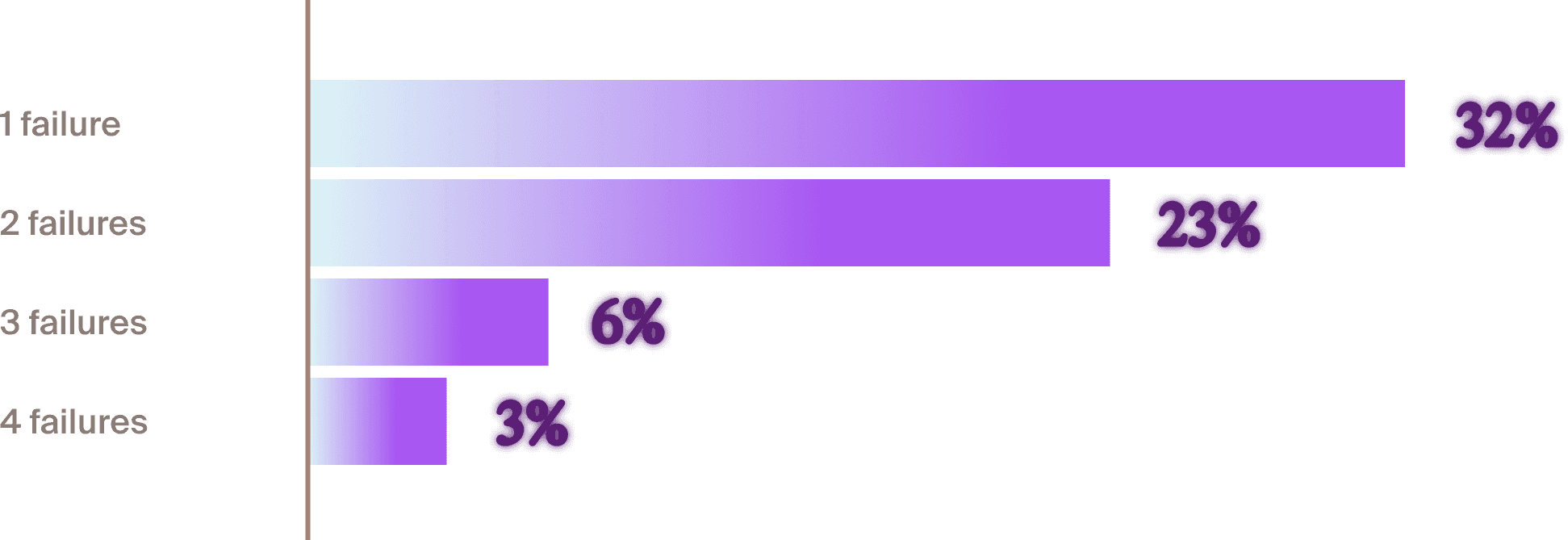
Nearly two-thirds of companies (64%) reported at least one customer-facing coordination failure in the past three months. Customers receiving inconsistent answers from different teams. Context lost between handoffs. Customers asked to repeat themselves. Messages missed because ownership was unclear.

Among companies with coordination failures: 

How many did they experience simultaneously

When coordination fails in a customer interaction, it rarely fails in one place. The request that got routed to the wrong team is also the request where context didn't travel. The customer who received an inconsistent answer is also the customer waiting on a response that no one knows they own. By the time it surfaces somewhere measurable, it has already moved through several hands.

Expand on this section

When top performers leave, AI fills the gap

When a top performer leaves, the instinct is to backfill. Increasingly, that means AI. 

Companies that lost someone to coordination burnout are significantly more likely to be deploying AI as a direct staffing replacement than those that haven't. 

But a person doesn't just handle tasks. A person knows who to loop in, when to escalate, and how to move context across teams. That coordination work happens quietly, and it doesn't show up on any dashboard until it stops happening. AI handles the task in front of it. The coordination the person was doing lands on whoever is left.

The AI being deployed to fill those seats operates on the same platforms, built with the same limitations, that couldn't prevent the burnout in the first place. It handles more volume. It doesn't reduce the coordination overhead that drove the departure.

Where the tax shows up for customers

The people who leave take more than their workload with them. They take the knowledge of who to call, how to escalate, and what a particular customer needs to hear. That's not in any system. When it walks out the door, customers feel it.

Nearly two-thirds of companies (64%) reported at least one customer-facing coordination failure in the past three months. Customers receiving inconsistent answers from different teams. Context lost between handoffs. Customers asked to repeat themselves. Messages missed because ownership was unclear.

Among companies with coordination failures: 

How many did they experience simultaneously

When coordination fails in a customer interaction, it rarely fails in one place. The request that got routed to the wrong team is also the request where context didn't travel. The customer who received an inconsistent answer is also the customer waiting on a response that no one knows they own. By the time it surfaces somewhere measurable, it has already moved through several hands.

Expand on this section

When top performers leave, AI fills the gap

When a top performer leaves, the instinct is to backfill. Increasingly, that means AI. 

Companies that lost someone to coordination burnout are significantly more likely to be deploying AI as a direct staffing replacement than those that haven't. 

But a person doesn't just handle tasks. A person knows who to loop in, when to escalate, and how to move context across teams. That coordination work happens quietly, and it doesn't show up on any dashboard until it stops happening. AI handles the task in front of it. The coordination the person was doing lands on whoever is left.

The AI being deployed to fill those seats operates on the same platforms, built with the same limitations, that couldn't prevent the burnout in the first place. It handles more volume. It doesn't reduce the coordination overhead that drove the departure.

Where the tax shows up for customers

The people who leave take more than their workload with them. They take the knowledge of who to call, how to escalate, and what a particular customer needs to hear. That's not in any system. When it walks out the door, customers feel it.

Nearly two-thirds of companies (64%) reported at least one customer-facing coordination failure in the past three months. Customers receiving inconsistent answers from different teams. Context lost between handoffs. Customers asked to repeat themselves. Messages missed because ownership was unclear.

Among companies with coordination failures: 

How many did they experience simultaneously

When coordination fails in a customer interaction, it rarely fails in one place. The request that got routed to the wrong team is also the request where context didn't travel. The customer who received an inconsistent answer is also the customer waiting on a response that no one knows they own. By the time it surfaces somewhere measurable, it has already moved through several hands.

QUESTIONS TO ASK YOUR TEAM

  • When your best people leave, do they say they can't handle the customers? Or do they say they can't handle the meetings, the handoffs, and the hours spent finding who owns what?

  • That’s coordination burnout. And when they go, something leaves with them that isn't in any system: who to call, how to escalate, what a particular account needs to hear.

  • The team that stays carries the same coordination overhead with less capacity to bear it. The AI brought in to fill the headcount runs on the same platform that couldn't prevent the departure. That knowledge doesn’t show up in any handover document.

SECTION 6:

SECTION 6:

The top 14% found the tax break

The top 14% found the tax break

One in seven companies in this study spend more

time solving than coordinating.

One in seven companies in this study spend more

time solving than coordinating.

They’re not doing easier work. They didn’t hire more people. They’re not in simpler industries.

What separates them is a set of operational choices that compound over time.

Below 1x

Below 1x

1x to 2x

1x to 2x

2x to 3x

2x to 3x

3x to 4x

3x to 4x

4x or higher

4x or higher

What they did differently

They treat coordination as measurable work. While only 5% of all companies track handoffs, coordination time, and duplicate work together, the most efficient companies treat these as core metrics. You can’t optimize what you don't measure.

They built for multi-team reality. Instead of forcing complex B2B work into tools designed for single-agent workflows, they built for how work actually moves: across teams, with context intact, without manual handoffs filling the gaps.

They gave AI the infrastructure it needs. When AI has access to full context across teams, it reduces coordination overhead instead of just shifting it around. That's why the most efficient companies are half as likely to say AI created additional coordination work.

The results show up across every dimension that matters.

The most efficient companies are more than twice as likely to report zero operational issues in the past three months. No context lost between teams. No customers repeating themselves. No messages missed because ownership was unclear.

The best people stay where the tax is lower

And they’re keeping their people. Nearly half of the most efficient companies report no burnout departures, compared to roughly a third across every other group.

Calculate your coordination tax
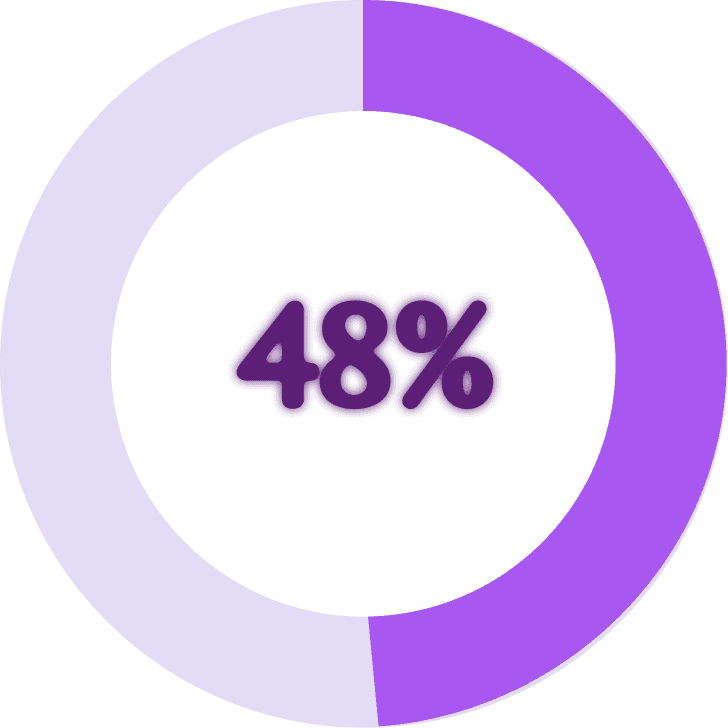
Most efficient companies

Less than one hour coordinating for every hour spent solving
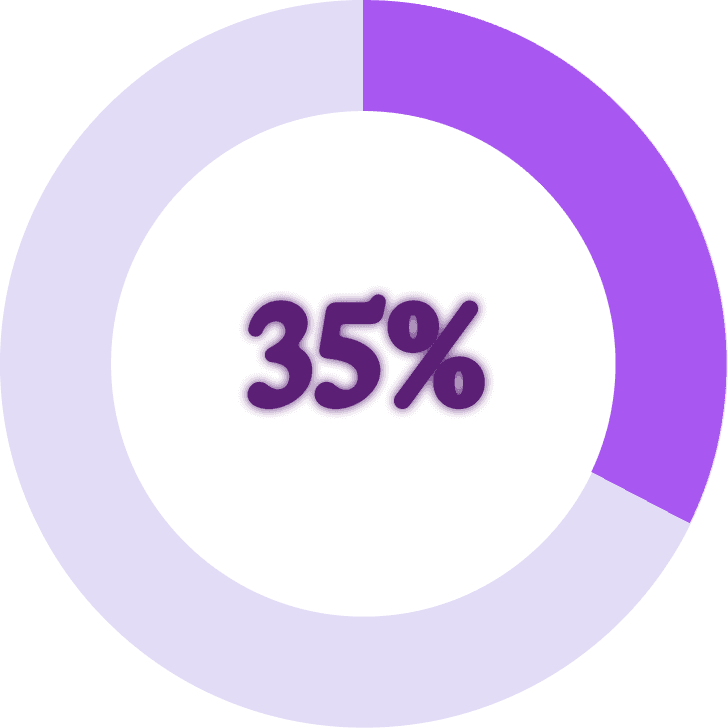
Everyone else

More than one hour coordinating for every hour solving

Coordination overhead burns through talent even when platform metrics look fine. When the overhead comes down, the job starts to feel like the job people signed up for. The most efficient companies are proof that the math can run the other way.

Before your next platform conversation, answer one question: where does your team’s time actually go?

If the answer looks like the nearly 70% of companies who spend at least 3 hours coordinating for every hour solving, you're not behind. You're normal.

But now you have the data and the language to make the case that “normal” isn’t good enough.

Ready to decrease your coordination tax?


Take a look at Front.

Most tools were built to dodge complexity. Front was built to orchestrate it. 

In B2B, every interaction can make or break a relationship, and every handoff is a chance for something to fall apart. The industry chased speed and deflection while the real, high-stakes work got buried under coordination overhead.

Front was built for the teams dealing with hard problems and complex customers, the ones holding the business together when things can’t afford to slip. It connects every team, workflow, and conversation so the whole operation moves with precision rather than getting lost in email chains and Slack threads. 

Autopilot runs the routine. Copilot handles the unpredictable. Together, they turn complexity into momentum and customer experience into a serious advantage. Front's AI sees the full picture, keeping teams fast, confident, and in control.

Find your coordination tax break at Front.com.

Calculate your coordination tax

For a typical customer request, what percentage of the time does your team spend on each of these activities?

Coordination Activities

0%
0100
0%
0100
0%
0100
0%
0100
0%
0100
0%
0100

Problem-solving Activities

0%
0100
0%
0100
Your coordination tax:
0.0:1

Compare to the study:

Calculate your coordination tax

For a typical customer request, what percentage of the time does your team spend on each of these activities?

Coordination Activities

0%
0100
0%
0100
0%
0100
0%
0100
0%
0100
0%
0100

Problem-solving Activities

0%
0100
0%
0100
Your coordination tax:
0.0:1

Compare to the study:

SECTION 7:

SECTION 7:

Methodology

Methodology

Sample

665 customer service, operations, and account management leaders at B2B companies, fielded January 8–15, 2026, by research partner Savanta.

Respondents were Senior Manager level and above, working full-time at companies with 51–5,000 employees across six industries: Technology/IT, Manufacturing, Transportation & Logistics, Financial Services, Consulting & Professional Services, and Travel & Hospitality. All respondents were located in the United States, United Kingdom, Canada, or Ireland, at companies serving B2B or mixed B2B/B2C markets, actively involved in managing customer operations and using a dedicated customer service or operations platform.

Coordination tax ratio

We asked respondents to estimate how their team's time is distributed across activities during a standard customer request. Coordination time was calculated as the sum of time spent finding the right people, coordinating next steps, internal meetings and messages, looping in others, waiting for responses or handoffs between teams, and re-explaining context that should already be shared. Problem-solving time was the sum of time spent tracking down data and account history, and implementing solutions.

The coordination ratio is coordination time divided by problem-solving time. Forty respondents reported spending 0% of their time on problem-solving and were excluded from ratio calculations. Final analysis sample: 625 respondents.

Median coordination ratio: 2.61×. Distribution: 31% below 2×, 30% in the 2–3× range, 39% at 3× or higher.

Sophistication assessment

Platform sophistication was assessed across four dimensions — Platform Functionality, Channel Sophistication, Collaboration Sophistication, and Automation Sophistication — to understand correlations between platform capabilities and coordination patterns. Sophistication levels reflect descriptive operational context, not a judgment of platform quality.

All findings are descriptive. Correlations reported in this study do not imply causation.

SECTION 8:

SECTION 8:

About this research

About this research

This report was commissioned by Front and conducted independently by Savanta, a global research and data company. Savanta designed and fielded the survey, collected responses, and performed initial data analysis. All findings and interpretations in this report are based on survey data from 665 qualified respondents collected January 8–15, 2026.

Front commissioned this research to quantify the coordination challenges facing B2B customer operations teams. The findings and conclusions are drawn from the data and do not represent the views of any individual respondent or organization.

For questions about methodology, data access for further analysis, or media inquiries, contact press@front.com.

The Coordination Tax is available in full at research.front.com